
What a Quantity Surveying Report Means: Two Common Meanings
Search for a quantity surveying report and you’ll find two quite different documents filed under the same name. Knowing which one you need saves time and money, and spares you a fair bit of confusion when quotes start arriving.
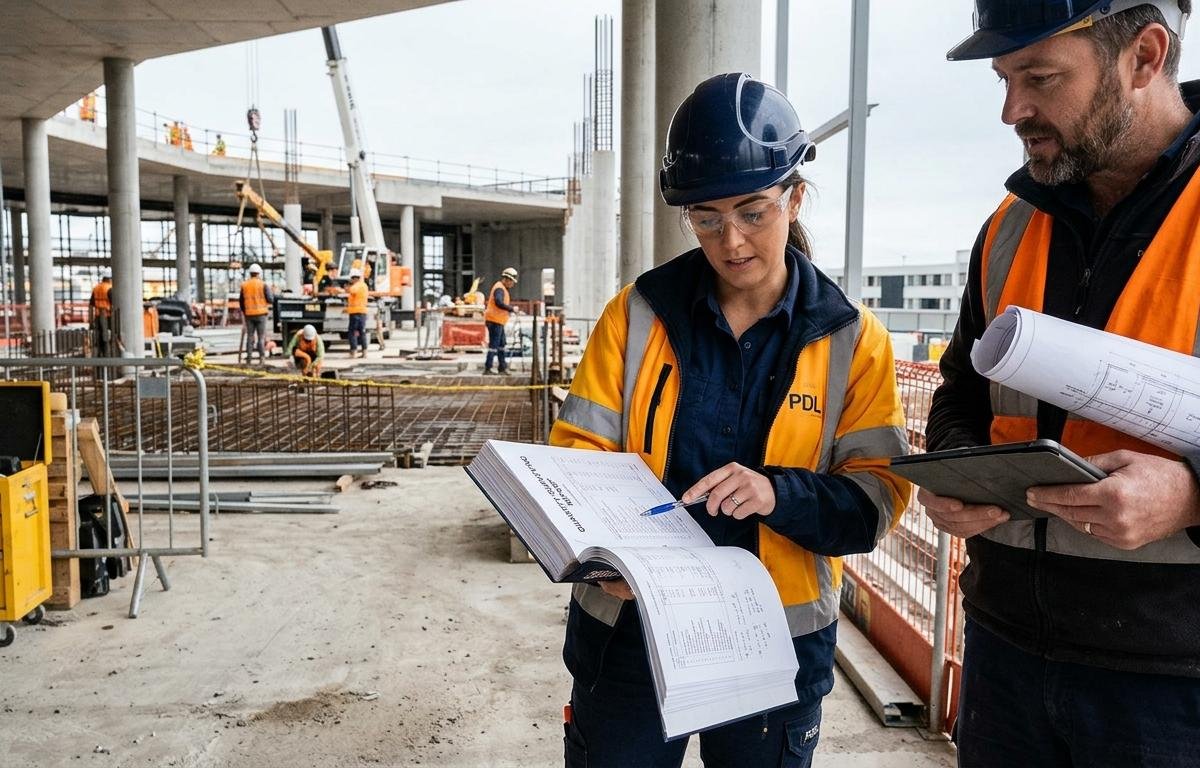
The first meaning is the construction cost report. This is the working output of a quantity surveyor (QS) on a building or infrastructure project: a cost plan, an estimate, a Bill of Quantities, a progress cost report or a final account. A registered QS estimates and monitors construction costs for all classes of building, according to the Victorian Building Authority. Before construction they prepare cost plans and tender documents. During construction they track spend against budget, forecast monthly cashflow and assess progress payments.
The second meaning is the tax depreciation schedule for an investment property. Many local-service providers use the phrase "quantity surveyor" almost exclusively for this. The same regulator notes that at completion a QS can also prepare tax depreciation schedules and replacement-cost estimates for insurance. It’s a genuine QS service, just a narrower one.
This article covers both, with the emphasis on client-side cost reporting. If you’re an investor who only wants a depreciation schedule, skip ahead to the sections on report types and briefing. If you’re a developer, owner-builder or project manager, the construction cost material is where most of the value sits.
One point on terminology. A "quantity survey" is also called a bill of quantities (BOQ): a detailed breakdown of the parts, materials and costs in a project. A quantity surveying report is usually broader. It can include the BOQ, but it also carries the assumptions, allowances, exclusions and commentary that make the numbers usable.
Main Report Types and When Each Is Triggered
Different stages of a project call for different reports. The names vary between firms, but the pattern holds.
Feasibility or early-stage cost report. This comes before the design is settled, when a developer or owner needs to know whether a project stacks up. It typically rests on rates per square metre or per element, with generous contingency because the design is incomplete. Its job is to inform a go or no-go decision, not to set a contract price.
Cost plan. Once the design develops, the QS produces a cost plan that allocates the budget across the building’s elements and is revised as drawings mature. It becomes the benchmark everything else is measured against.
Pre-tender estimate and tender documents. Before going to market, the QS prepares a detailed estimate and often a Bill of Quantities or schedule of rates, so every tenderer prices the same scope. The estimate also gives the client a reference point for judging tender returns. Our guide on what quantity surveying services include covers this stage in more detail.
Tender evaluation report. After tenders return, the QS compares them, checks for errors and omissions, and helps the client select a builder.
Progress or monthly cost report. During construction, this tracks the contract sum, approved variations, payments to date, forecast final cost and cashflow. It’s the report most often updated on a regular cycle.
Final account. At practical completion, the QS reconciles the contract sum, variations and provisional sums into a final settled figure.
Tax depreciation schedule and insurance replacement-cost report. These sit at the ownership end of the lifecycle rather than the delivery end. They assess the cost of a building’s structure and fittings to support depreciation claims, or to estimate what rebuilding would cost for insurance purposes.
As a rule of thumb, delivery-stage reports serve people commissioning a build, while depreciation and replacement-cost reports serve people who own a completed asset.
What a QS Report Typically Contains
No single template is mandatory, so contents vary by firm and by report type. Still, a well-built quantity surveying report tends to share a recognisable structure, and the parts that matter most are often the least glamorous.
Executive summary. A one-page statement of the headline figure, the status against budget, and the key risks or decisions needed from the reader.
Basis of the report. The documents the QS relied on: drawings and their revision numbers, specifications, site information and dates. A cost is only as good as the information behind it.
Cost breakdown. Usually presented by building element (substructure, frame, envelope, services, fit-out, external works) or by trade. The elemental format lets a client see where the money is going and compare against similar projects, rather than staring at one lump sum.
Quantities and rates. In a BOQ-based report, measured quantities are paired with unit rates. Measurement discipline is the heart of quantity surveying: measuring, estimating and managing construction cost systematically.
Allowances, provisional sums and contingency. These should be clearly separated, because blending them into base rates hides risk. A good report shows how much is firm and how much is a placeholder.
Assumptions and exclusions. Perhaps the most important section for avoiding disputes. It records what the QS assumed (ground conditions, procurement method, programme) and what isn’t included, such as land costs, finance, GST treatment or client-supplied items.
Variations and cashflow (construction-stage reports). Approved and pending variations, payments certified, and a forecast of spend by month through to completion.
Version control. Report number, date and revision history, so everyone reads the same version. Skipping this is a surprisingly common cause of confusion on multi-party projects.
A depreciation schedule has a different shape: an asset-by-asset list with cost allocations, effective lives and annual deductions. The principle is the same, though. The document should show its basis and its limits.
Who Orders a QS Report and Why
Knowing who commissions the report clarifies what it’s for. RICS describes two paths: the contractor’s QS, who represents the construction firm, and the private or client-side QS, who works directly for the client. The same facts produce different reports depending on whose side the surveyor is on.
Developers and owners commission client-side reports to test feasibility, set budgets and control cost. Their question is simple: will this cost what we think it will, and are we getting value?
Lenders and funders often require an independent cost review or progress monitoring before releasing funds. A QS report gives them confidence that drawdowns match work actually done.
Contractors use their own QS to price tenders, value work for progress claims and manage subcontract costs. Their reports serve commercial position rather than client oversight.
Project managers rely on QS cost reporting as a core input to their own governance. If you work on the delivery side, the project charter template shows where budget and cost-reporting expectations are typically set at project start.
Property investors and accountants order depreciation schedules to support tax claims on an income-producing property. This is the buyer behind most "quantity surveyor near me" searches in cities like Melbourne, Brisbane and Sydney.
Insurers and owners ask for replacement-cost estimates so that cover reflects what it would genuinely cost to rebuild.
One distinction worth flagging: a QS isn’t simply a cost estimator by another name. Terminology differs by region, and in some markets "construction cost estimator" is the common title. In Australia and New Zealand, quantity surveying carries a broader remit that includes cost planning, contract administration support and final account work, not just pricing a set of drawings.
How to Choose a Quantity Surveyor and Brief the Report
Choosing the right QS comes down to fit, credentials and the quality of your brief.
Check registration and credentials. In Victoria, quantity surveyors are registered as building practitioners, and registration requires a project list showing experience gained under a registered QS or AIQS member. In other jurisdictions, professional membership such as AIQS in Australia or NZIQS in New Zealand is a reasonable signal, though you should confirm the specific requirements where your project sits. Our overview of quantity surveying salary and career pathways explains how those credentials are earned, which tells you something about the experience behind a signature.
Match experience to the project. A surveyor who mostly produces depreciation schedules isn’t necessarily the right person for a multi-storey cost plan, and the reverse also holds. Ask for examples at a similar scale and type.
Write a clear brief. Specify the report type, the stage of design, the documents you’ll supply and the decision the report must support. State the format you want, such as an elemental or trade breakdown, and how often updates are needed if it’s a progress report.
Ask what’s included and excluded. Request that exclusions and assumptions be set out explicitly, and ask how revisions are handled when drawings change.
Agree timing and fees up front. Fees and turnaround vary by report type, project size and complexity, so get a written scope and quote rather than relying on rule-of-thumb figures.
Plan for review. Build in time to read the report with the QS, question the assumptions and confirm you understand the risks flagged. A quantity surveying report is a decision tool, and it only works if the people relying on it understand its basis.
Get those pieces right and the report becomes more than a number on a page. It becomes an early warning system for cost, which is exactly what a good QS is there to provide.