
Project managers need more than authority to keep work moving. They need project leadership support that protects their attention and clarifies priorities. Effective support connects daily work to project goals, tests assumptions through regular communication and removes distractions that divert effort from value. It also gives teams guidance and encouragement when plans or circumstances change.
It’s understandable that communication can become harder when people are overloaded, priorities compete and decisions need to keep pace with delivery. Strong leadership creates a clearer operating rhythm: team members understand what matters, stakeholders stay informed and managers have space to focus on the work that needs their attention. This article outlines practical ways to strengthen communication, support team motivation and reduce overload and distraction, so project leaders can maintain alignment without adding unnecessary process.
Key Takeaways
- Connect project tasks to intended outcomes, then use regular updates to surface assumptions and keep stakeholders aligned.
- Build engagement through informed guidance, encouragement and a team environment where people can raise concerns and contribute.
- Protect managers’ focus by addressing low-value work, clarifying priorities and modelling sensible boundaries.
- Match the support to the need: project management consultancy can help with delivery challenges, while training can build project capability.
1. Communication within project teams and with stakeholders
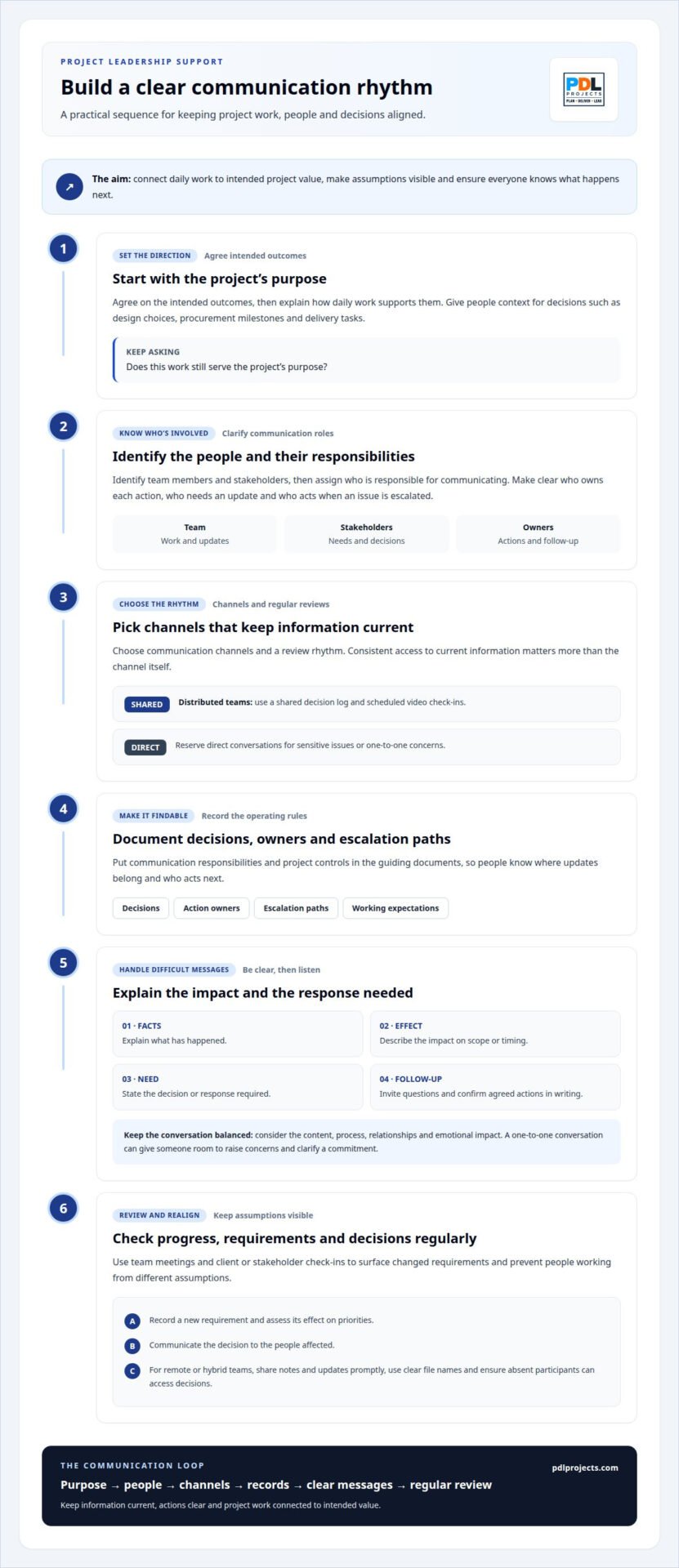
Clear communication connects daily work to the project’s intended value. A project leader can explain how a design decision, procurement milestone or delivery task supports the agreed outcome, giving team members useful context. Regular updates on the plan, decisions and changes also help prevent people from working from different assumptions. In team meetings, ask whether progress still serves the project’s purpose and identify any changed requirements.
To establish project leadership support, agree on the intended outcomes, identify team members and stakeholders, assign communication responsibilities, then choose channels and a review rhythm. Record decisions, owners and escalation paths in the project’s guiding documents, so everyone knows where updates belong and who acts next. A distributed team, for example, can use a shared decision log and scheduled video check-ins, reserving direct conversations for sensitive issues. Consistent access to current information matters more than the channel.
Trust depends on how leaders handle difficult messages as well as routine updates. Explain the facts, describe the effect on scope or timing, and state what decision or response is needed. Invite questions, then confirm agreed actions in writing. A one-to-one conversation can give a team member room to raise concerns or clarify a commitment without the pressure of a larger meeting. Listening this way can surface risks that might otherwise go unspoken.
Set expectations by clarifying what will be delivered, who owns each action and how changes will be managed. When a stakeholder requests a new requirement, record it, assess its effect on priorities and communicate the decision to those affected. Regular client and stakeholder check-ins keep assumptions visible as needs change. For remote or hybrid teams, share meeting notes and updates promptly, use clear file names and ensure absent participants can access decisions. These simple controls maintain alignment across locations and working hours.
When sharing difficult messages, balance the content, process, relationships and emotional impact. This helps preserve stakeholder relationships while giving team members space to ask questions, listen and receive coaching.
Leadership’s contribution to team engagement and motivation
People are more engaged when they understand their contribution and receive guidance they can act on. Recognise completed work, explain how it advances an outcome and address setbacks without blame. If a supplier delay changes the plan, for example, clarify priorities, invite options and agree on a practical correction. This keeps attention on resolving the issue rather than assigning fault.
Psychological safety supports honest discussion and early risk reporting. The book The Power of Project Leadership describes it as important to high-performing teams and recommends giving people a meaningful role during change. Leaders can encourage inclusion by inviting quieter members to contribute, rotating meeting facilitation and making room for questions. These practices help prevent the same voices from dominating decisions.
When choosing project leadership support, first define the gap: delivery oversight, team capability or clearer decision-making. Then assess whether the proposed approach fits the project outcomes, governance needs and team responsibilities. Good support builds shared capability rather than dependence, and adds process only where it serves a purpose.
In New Zealand, project management or leadership support costs depend on scope, duration and the specialist input required; pricing is provided after a quote request. A defined delivery challenge may require different input from broader oversight or capability development.
Use a team charter to make expectations concrete. Record the project purpose, roles, decision rights, working norms and how disagreements will be raised. Review the agreements when membership or circumstances change. A short retrospective can identify which practices help people contribute, where responsibilities remain unclear and what the team should adjust. This gives motivation a practical foundation: people understand their roles, can raise concerns and see how their work connects to shared delivery.
Encouragement paired with informed guidance can help a team stay optimistic and focused. When outcomes or circumstances change, a project leader can help the team stay on track or adjust course. This connects motivation with practical direction: the team receives support while priorities change to fit the situation, rather than being left to navigate change without clear leadership.
3. Protecting project managers from overload and distraction
A project manager cannot protect delivery if every new request becomes a priority. Leaders should compare proposed work with the organisation’s broader value proposition, then defer or stop projects that do not fit. For example, if a new initiative duplicates existing work without advancing agreed outcomes, pause it and redirect attention. This limits competing demands before they fragment the manager’s focus.
Set clear boundaries around the project manager’s role. Record which decisions they own, which need sponsor approval and how urgent requests should be escalated. A regular priority review can reveal conflicting deadlines, missing decisions and work that no longer serves the project purpose. Leaders should also model sensible boundaries by protecting planned focus time and avoiding routine interruptions during agreed work periods.
New Zealand organisations choose project management frameworks and standards to suit their governance, scale and delivery context. Teams can apply a consistent framework while tailoring planning, reporting and decision controls to the project’s needs. A framework provides structure, but leaders still need to assess value, assign responsibilities and manage change as work develops.
Common project leadership challenges include shifting requirements, unclear accountability, resource conflicts and distractions from low-value work. These risks can compound: an unresolved decision may delay a dependency while the manager handles unrelated requests. A live risk and issue log helps leaders record the cause, owner, impact and next action, then focus attention on matters that threaten delivery.
To reduce overload, review the project portfolio, confirm the manager’s current priorities and remove work that lacks strategic fit. Then agree on a manageable sequence, delegate routine coordination and set a route for urgent decisions. For instance, a sponsor could bring separate requests to a scheduled review, allowing the manager to assess their combined effect before the plan changes. Regular oversight keeps capacity visible, supports timely corrections and protects attention for essential work.
4. What project leadership support services are available in New Zealand?
In New Zealand, organisations can shape project leadership support around the gap they need to address. Some need an experienced leader to coordinate delivery; others need independent oversight, clearer governance or stronger internal capability. Start by defining the project outcome, the decisions that need attention and the responsibilities the current team can retain. This assessment helps determine whether support should be embedded, advisory or focused on developing people.
An embedded project leader can coordinate plans, dependencies, risks and reporting alongside the delivery team. A complex facilities upgrade, for example, may need someone to maintain the integrated schedule and escalate decisions affecting several workstreams. Advisory input can suit a team that already manages day-to-day delivery but needs a structured review of governance, priorities or project controls. In either case, agree on scope, authority and reporting relationships before work begins.
Commercial oversight is another relevant dimension for projects involving budgets, procurement or changing scope. Clear cost reporting and disciplined change assessment help decision-makers understand the implications of proposed changes before approving them. For instance, a scope adjustment can be recorded alongside its effect on the forecast, schedule and intended outcome. This connects commercial information to leadership decisions instead of treating cost control as a separate reporting exercise.
Capability-building support can strengthen how teams plan, coordinate and make decisions. Practical workshops can use a live project scenario to clarify roles, practise risk discussions and improve consistency. Choose learning around an identifiable need, such as better handovers between design and delivery teams, then apply it to current work. This makes development a delivery tool rather than a standalone activity.
To choose a suitable model, compare the project’s complexity, internal capacity and decision bottlenecks. Define success, decision ownership and how progress will be reviewed. A contained advisory need calls for a different arrangement from ongoing delivery coordination. Clear scope and accountability give the organisation a basis for assessing whether the support addresses the original problem.
PDL Projects: Project Management Consultancy
PDL Projects provides Project Management Consultancy for organisations needing structured support with project delivery, coordination or oversight. It can help when priorities compete, responsibilities need clarification or managers need additional project leadership capacity.
For projects where cost control and commercial visibility are central, Cost Management & Quantity Surveying can complement project management input. Organisations seeking to strengthen internal capability can also consider tailored professional development and specialised training programs. The right option depends on whether the priority is delivery support, commercial management or upskilling.
Define the project challenge and the support you need, then discuss how the relevant service fits your objectives. Contact PDL Projects to discuss your project management needs.
Make the next project decision clearer
Before the next delivery cycle, identify one point where communication or competing priorities are slowing decisions. Map who needs to decide, what information they need and where the decision will be recorded. This brief review can reveal unclear ownership, duplicate reporting or work that no longer serves the project’s purpose. Use the findings to agree on a practical adjustment with those responsible for delivery.
Effective project leadership support should strengthen a team’s ability to make sound decisions, not add another layer of activity. Set a clear priority, assign an owner and review whether the change is helping work move forward. If the challenge calls for structured external input, PDL Projects can discuss your project’s needs and relevant support.
Contact PDL Projects to discuss support and identify a considered next step for your team. With clear priorities and purposeful communication, leaders can create a steadier path from decisions to delivery.
Frequently Asked Questions
What does project leadership support include?
Project leadership support provides practical guidance to help teams make decisions and maintain delivery oversight. For example, a team preparing a business case could get help clarifying approval criteria, testing assumptions and identifying who needs to endorse the proposal. The focus should reflect the project’s current stage and capability gap, so the input addresses an operational need without adding unnecessary process.
What skills and responsibilities does a project leader need?
A project leader needs sound judgement, clear communication and the ability to bring people together around shared outcomes. Project leadership support can include clarifying decision authority, resolving issues across workstreams and escalating matters beyond the leader’s remit. If two teams need the same specialist, the leader assesses the delivery implications and brings a recommendation to the appropriate decision-maker.